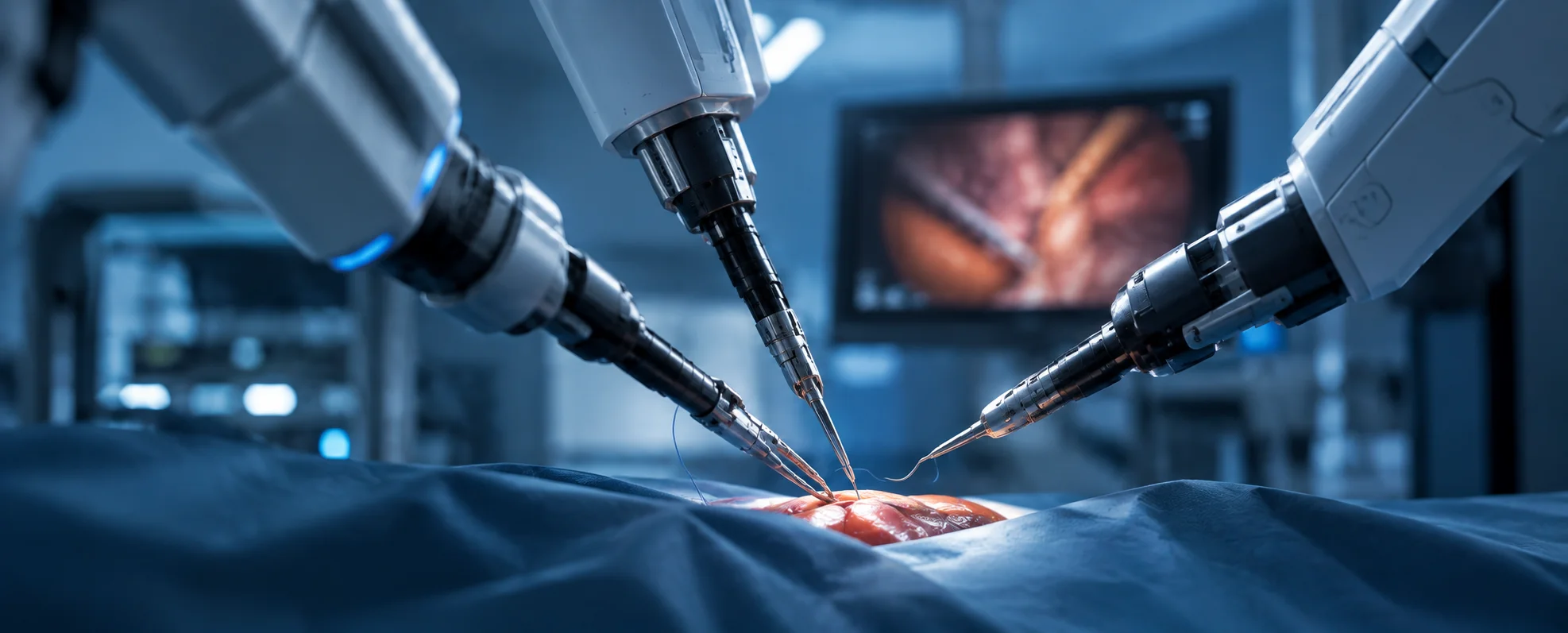
Robotic surgery has become an important part of modern liver, pancreatic and biliary surgery. For appropriately selected patients, it allows complex operations to be performed through smaller incisions while providing the surgeon with magnified three-dimensional vision, highly articulated instruments and exceptional precision during dissection and reconstruction.
For Dr. Manikandan Kathirvel, however, the important question is not simply “can this operation be done robotically?” The more important question is: does performing this operation robotically offer a meaningful advantage to this particular patient, without compromising safety or the principles of the operation?
As a surgeon practising complex hepatopancreatobiliary (HPB), liver transplant and minimally invasive surgery, including robotic surgery, he considers robotic, laparoscopic and open approaches depending on the disease, anatomy and complexity of each case. Robotic surgery is an important tool in modern HPB surgery, but like every surgical technology, its real value lies in knowing where and when to use it.
Key Takeaways
- The relevant question before choosing a robotic approach is not whether an operation can be done robotically, but whether robotics offers a meaningful advantage to that specific patient without compromising safety or oncological principles.
- Robotic liver, pancreatic and biliary surgery each have their own evidence base and their own limits; none should be assumed suitable for every patient simply because the technology exists.
- Robotic donor hepatectomy for living donor liver transplant is supported by growing evidence showing reduced blood loss and lower transfusion needs compared with laparoscopic and open approaches, though operating times are longer.
- Fully robotic recipient liver transplantation remains an emerging field, with worldwide published experience still limited to fewer than 100 recorded cases across a handful of pioneering centres.
- Converting to open surgery during a robotic procedure is a safety decision, not a failure, and a surgeon’s judgement about when to use robotic, laparoscopic, or open surgery matters more than how often the robotic platform is used.
What Does Robotic Surgery Actually Mean?
One of the most common misconceptions patients have is that the “robot” performs the operation. It does not.
During robotic surgery, the surgeon remains in complete control throughout the procedure, operating from a console within the operating theatre and controlling the camera and every movement of the instruments in real time. The robotic system translates the surgeon’s hand movements into highly precise movements of instruments inside the patient.
The technology provides several important advantages:
- high-definition, magnified three-dimensional vision
- wristed instruments that can bend and rotate inside the abdomen
- excellent precision during fine dissection
- tremor filtration
- improved ability to suture and reconstruct within confined spaces
- improved ergonomics during long and complex procedures
These features are particularly relevant to HPB surgery because liver, pancreatic and bile duct operations frequently involve delicate dissection around major blood vessels and bile ducts, often followed by complex reconstruction.
Why Robotics Is Particularly Suited to HPB Surgery
HPB surgery is among the most technically demanding areas of abdominal surgery. A liver tumour may lie immediately beside a major hepatic vein, portal pedicle or the inferior vena cava. Pancreatic surgery may require dissection around major arteries and veins followed by reconstruction of the pancreas, bile duct and gastrointestinal tract. Complex biliary surgery may require precise suturing of very small bile ducts.
Conventional laparoscopy has transformed many abdominal operations, but straight laparoscopic instruments have limitations when operating in deep or confined spaces. The robotic platform adds articulation, magnified 3D vision and greater freedom of movement.
This is why the real potential of robotic surgery in HPB practice is not simply that it produces smaller scars. Its greater value is the possibility of performing increasingly complex surgery through a minimally invasive approach while maintaining the principles of conventional open HPB surgery.
Robotic Liver Surgery
Liver resection is one of the areas where robotic surgery has developed significantly. Robotic liver surgery may be considered for selected patients with:
- hepatocellular carcinoma (HCC)
- colorectal liver metastases
- intrahepatic cholangiocarcinoma
- selected gallbladder cancers involving the liver
- neuroendocrine liver metastases
- selected benign liver tumours
- other complex liver lesions
The evidence supporting minimally invasive liver surgery has grown considerably over the last decade. A 2026 systematic review and network meta-analysis covering 23 studies and more than 9,600 patients found robotic hepatectomy associated with significantly fewer overall and major complications compared with open surgery, less blood loss, a shorter hospital stay, and a lower conversion rate than laparoscopic surgery.
The liver contains an intricate network of arteries, portal veins, hepatic veins and bile ducts. The magnified three-dimensional view offered by the robotic platform can be particularly useful for precise hilar and vascular dissection. The articulation of the instruments may also facilitate operations in difficult locations within the liver and allows precise intracorporeal suturing when required.
Another important concept is parenchymal-sparing liver surgery. When oncologically appropriate, the objective is to remove the tumour while preserving as much healthy functioning liver as possible. The precision provided by modern minimally invasive techniques can be particularly valuable when planning these tailored resections.
However, not every liver tumour should be approached robotically. Large tumours, extensive vascular involvement, some hilar tumours, multivisceral resections and situations where rapid major vascular control is anticipated may still be better approached through open surgery. The best operation is not necessarily the most minimally invasive operation. It is the operation that achieves the required treatment safely while preserving as much of the patient’s normal physiology as possible.
For the full clinical breakdown of liver cancer requiring resection, including the resection-versus-transplant decision, see Liver Transplant in Chennai: The Complete Patient Guide and HPB Surgery: The Patient’s Guide to Complex Hepatobiliary Surgery.
Robotic Pancreatic Surgery
Pancreatic surgery is another area where robotic technology has made considerable progress. Depending on the disease and anatomy, robotic approaches can be considered for procedures including:
- distal pancreatectomy
- spleen-preserving distal pancreatectomy
- pancreatic enucleation for selected lesions
- other selected pancreatic resections
- pancreaticoduodenectomy (Whipple procedure)
The advantages of the robotic platform become particularly relevant when an operation involves both complex dissection and reconstruction.
Robotic Whipple Surgery
The Whipple procedure is one of the most complex operations performed in abdominal surgery. It usually involves removal of the pancreatic head, duodenum, distal bile duct and gallbladder, followed by reconstruction of the pancreatic, biliary and gastrointestinal systems. Traditionally, this requires a large abdominal incision.
Robotic technology has made it possible for selected patients to undergo this highly complex operation through a minimally invasive approach. The potential advantage is not merely the smaller incision. The reconstructive part of a Whipple operation requires extremely precise suturing, particularly during the pancreatic and biliary anastomoses. The combination of magnified 3D vision and wristed instruments can be particularly valuable during these steps.
A comprehensive review of the published literature has found that robotic Whipple procedures can achieve comparable rates of complete tumour removal and lymph node yield to open surgery, with reduced blood loss and shorter hospital stays at high-volume centres, while overall complication rates and short-term mortality remain similar to open and laparoscopic approaches. Operating times are consistently longer with the robotic approach, reflecting the complexity of the reconstruction involved, and published experience continues to grow.
This is therefore an operation where patient selection and the experience of the surgical team are particularly important. For pancreatic cancer, the primary objective must always remain an oncologically sound cancer operation. A minimally invasive approach should never compromise tumour clearance, lymph-node dissection or the quality of reconstruction.
Robotic Biliary Surgery
The advantages of robotic surgery can also be particularly relevant in selected complex biliary operations. These may include:
- selected bile duct resections
- choledochal cyst surgery
- biliary reconstruction
- benign biliary strictures
- selected redo biliary operations
- complex gallbladder and bile duct surgery
Biliary reconstruction may involve suturing relatively small bile ducts deep within the abdomen. The ability of robotic instruments to articulate inside the body, combined with magnified three-dimensional vision, can make fine dissection and reconstruction particularly attractive in these situations.
What About Robotic Gallbladder Surgery?
Gallbladder removal can certainly be performed robotically. However, conventional laparoscopic cholecystectomy is already an excellent minimally invasive operation for the vast majority of patients. A study conducted at a tertiary care centre in India evaluating robotic cholecystectomy in 63 patients reported an average hospital stay of under two days and a very low complication rate, confirming that the standard operation already performs well without robotic assistance for straightforward cases.
Simply performing an uncomplicated gallbladder operation robotically does not necessarily provide a meaningful clinical advantage. The value of robotics becomes much more apparent as the complexity of dissection and reconstruction increases.
This is an important principle in Dr. Manikandan Kathirvel’s practice: robotic surgery is not recommended simply because a robot is available. It is recommended when the technology is believed to add value to the operation.
Robotic Surgery in Living Donor Liver Transplantation
One of the most exciting applications of robotic surgery within transplantation is living donor liver surgery. However, it is essential for patients and families to understand that a living donor liver transplant involves two completely different operations:
The donor operation: where a portion of liver is removed from a healthy donor.
The recipient operation: where the diseased liver is removed and the donated liver graft is implanted.
The role of robotic surgery is at a different stage of development in these two operations.
For a complete explanation of how living and deceased donor pathways compare and how families can pursue both simultaneously, see Living Donor vs Deceased Donor Liver Transplant.
Robotic Donor Hepatectomy
Living liver donors are healthy individuals undergoing major surgery entirely for the benefit of another person. For that reason, donor safety must remain the absolute priority. At the same time, reducing the physical impact of the operation on a healthy donor is an important goal, which has driven the development of minimally invasive and robotic donor hepatectomy.
The evidence is increasingly encouraging. A 2026 systematic review and meta-analysis including more than 15,000 living donors found robotic donor hepatectomy to be associated with lower transfusion requirements and lower overall donor morbidity compared with laparoscopic donor surgery, although robotic operations generally took longer. The authors noted that the certainty of some of the available evidence remains limited. A separate 2026 umbrella review of the available evidence found robotic donor hepatectomy associated with approximately 117 mL less blood loss and a modestly shorter hospital stay, again with longer operating times.
This represents an important direction for living donor surgery. If a healthy person is undergoing major surgery to donate part of their liver, an approach that can reduce the physical impact of that operation without compromising donor or graft safety is understandably attractive. However, donor anatomy, graft type and the experience of the transplant team remain crucial in deciding whether a minimally invasive donor operation is appropriate.
What About Robotic Liver Transplantation in the Recipient?
This is where terminology can become confusing. Robotic donor hepatectomy is not the same as robotic liver transplantation in the recipient.
During the recipient operation, the surgeon must remove a diseased liver, often in the presence of severe portal hypertension, and then perform major vascular reconstructions involving the vena cava, portal vein and hepatic artery, followed by biliary reconstruction. This is considerably more complex than simply transferring an established abdominal operation to a minimally invasive platform.
Fully robotic recipient liver transplantation has now been successfully performed at pioneering transplant centres around the world. The early results are notable and demonstrate what may become possible in the future. However, it is not yet routine liver transplant surgery.
A worldwide systematic review and meta-analysis published in 2026 identified only 93 robotic recipient liver transplants across ten published studies from five countries. Most involved carefully selected recipients and living-donor right-lobe grafts. The authors concluded that robotic transplantation appears technically feasible with encouraging early outcomes, but emphasised the need for larger multicentre experience and proper benchmarking against conventional transplantation, and recommended that the field currently develop within experienced, high-volume transplant centres with dedicated multidisciplinary robotic teams.
So when a patient hears the phrase “robotic liver transplant,” an important question to ask is which part of the transplant is actually being performed robotically: the donor operation, the recipient operation, or both. These are very different procedures with very different levels of supporting evidence.
Dr. Manikandan Kathirvel’s Approach to Robotic HPB Surgery
Robotic surgery is treated as an extension of modern HPB surgery, rather than as a separate specialty. His background in liver transplantation and complex liver, pancreatic and biliary surgery influences how patients are selected for minimally invasive and robotic procedures. Before recommending a robotic approach, several factors are considered.
The disease. Is this cancer, a benign tumour or another condition? What operation does the disease actually require?
Tumour anatomy. The relationship between the tumour and the hepatic artery, portal vein, hepatic veins, vena cava, bile ducts and other surrounding structures may be more important than tumour size alone.
Oncological principles. For cancer surgery, a smaller incision must never come at the expense of an adequate resection margin, appropriate lymph-node dissection or the correct oncological operation.
Previous surgery. Previous abdominal operations and adhesions may increase the complexity of a minimally invasive approach.
Underlying liver quality. For liver surgery, cirrhosis, portal hypertension, fatty liver and the volume and quality of the future liver remnant all influence operative planning.
Need for vascular reconstruction. The possibility of arterial, portal venous or major venous reconstruction may influence whether robotic, laparoscopic or open surgery provides the safest approach.
The patient’s overall condition. A technically possible operation is not necessarily the right operation for every patient.
This leads to the guiding principle: the decision is not whether an operation can be performed robotically. The decision is whether performing it robotically gives that patient a meaningful advantage.
What Are the Potential Advantages of Robotic HPB Surgery?
For appropriately selected patients, potential advantages can include:
- smaller incisions
- reduced abdominal wall trauma
- reduced blood loss in some procedures
- less postoperative pain in selected operations
- earlier mobilisation
- potentially shorter hospital stay
- magnified three-dimensional visualisation
- excellent instrument articulation
- precise dissection around blood vessels and bile ducts
- sophisticated intracorporeal suturing and reconstruction
But these benefits are only meaningful if the quality and safety of the underlying operation are maintained.
What Are the Limitations?
Robotic surgery also has limitations, and these should be discussed openly.
Cost. Robotic surgery is generally more expensive than conventional laparoscopic or open surgery because of the cost of the robotic platform, maintenance and specialised instruments.
Operating time. Complex robotic operations may take longer, particularly during the learning phase of a surgeon or programme.
Experience matters. A hospital owning a robotic system does not automatically make it a robotic HPB centre. Complex robotic liver and pancreatic surgery requires expertise in both the underlying HPB operation and the robotic approach.
Not every patient is suitable. Tumour anatomy, vascular involvement, previous surgery and the patient’s physiological condition can all make an open or conventional laparoscopic operation more appropriate.
Conversion to open surgery is not failure. If unexpected bleeding, difficult anatomy, tumour involvement or another intraoperative finding makes an open operation safer, converting to open surgery is a surgical safety decision, not a complication or a failure of robotic surgery. This is something patients are specifically counselled on in advance.
Robotic, Laparoscopic or Open Surgery: Which Is Better?
There is no single answer. All three approaches have a place, depending on the case. For one patient, robotic surgery may provide an excellent minimally invasive solution to a complex problem. For another patient, conventional laparoscopy may achieve the same objective without the additional complexity or expense of robotics. For another, open surgery may provide the safest vascular control and the best oncological operation.
The expertise of an HPB surgeon should not be judged simply by how often the robot is used. It should be judged by knowing when robotics adds value, when laparoscopy is sufficient, and when open surgery remains the safest and best operation.
Questions to Ask Before Robotic HPB Surgery
For a patient or family considering robotic liver, pancreatic or biliary surgery, these are reasonable questions to ask a surgeon:
- Why is a robotic approach beneficial for this particular operation?
- How experienced is the surgical team with this specific robotic procedure?
- Would an open or laparoscopic approach be recommended if the patient’s anatomy made that safer?
- What circumstances might require conversion to open surgery?
- If this is cancer surgery, will the same oncological principles be maintained irrespective of the surgical approach?
- What additional cost is associated with robotic surgery?
- If robotic liver transplantation is being discussed, which part of the donor and recipient operations will actually be performed robotically?
A surgical team should be comfortable discussing these questions openly.
Considering Robotic Liver, Pancreatic or Biliary Surgery?
For a patient diagnosed with a liver tumour, pancreatic tumour, bile duct condition or another complex HPB problem, the first decision should not be whether robotic surgery is wanted. The first decision is what the right treatment for the disease actually is. Once the appropriate operation has been established, a robotic, laparoscopic or open approach can be assessed for the best balance of safety, effectiveness and recovery.
Dr. Manikandan Kathirvel is a Consultant HPB and Multi Organ Transplant Surgeon at Gleneagles Hospital (Fortis Network), Chennai, with extensive UK training in complex HPB and transplantation, including advanced multi-organ transplant training in Cambridge. He provides specialist evaluation for robotic and minimally invasive liver, pancreatic and biliary surgery, complex HPB surgery and liver transplantation.
Patients and families can request an HPB or robotic surgery evaluation. For a second opinion, patients can bring their CT or MRI images, reports, histopathology and previous treatment records for detailed review.